You’re standing in a Singapore furniture showroom, running your hand across a tabletop that looks like solid teak. But looks deceive. Grain patterns, edge seams, and even the sound a surface makes when you knock on it reveal what’s really underneath. Before you commit to that price tag, there’s a method to verify construction quality—one that separates genuine craftsmanship from clever veneer work.
Spot Real Wood by Checking the Grain Pattern
Typically, solid wood reveals its grain consistently on every surface—top, edge, and underside—because the pattern runs continuously through the material. Flip the piece over and inspect the underside; grain direction should match the top exactly. Veneer often shows mismatched or repeating patterns where sheets were spliced together. Run your fingers along the edge—you’ll feel authentic texture, not laminate. Quality furniture makers never hide these details.
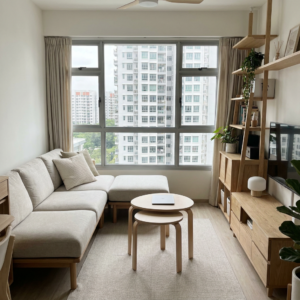
Inspect the Edges and Underside for Veneer Seams
Because veneer construction requires a substrate, you’ll find the real evidence at the edges and underside, not the top surface. Flip the piece and check tabletop edges for a visible seam line where veneer wraps over MDF or particleboard core. Run your fingernail along the edge—solid wood joins seamlessly, while veneer reveals a thin layer, often 1-2mm thick, bonded atop a different substrate material entirely.
Test the Weight, Knock Sound, and Temperature
Once you’ve checked the seams, put your senses to work on heft and resonance. Lift one end: solid timber carries noticeable density, while veneer-over-particleboard feels unexpectedly light. Knuckle-knock the surface—solid wood yields a sharp, solid rap; engineered cores sound dull and hollow. Finally, press your palm against the material. Genuine wood feels cool, then warms gradually, whereas laminate surfaces stay neutral and synthetic to the touch.
Know When Veneer Furniture Is Still a Smart Buy
Don’t write off veneer the moment you spot it—quality engineered construction often outperforms solid wood in specific applications. High-grade plywood or MDF cores with hardwood veneer resist warping and humidity swings better than solid planks, especially in Singapore’s climate. Large tabletops and wide panels benefit from this stability. Check for thick veneer sheets, tight seams, and solid joinery—these signal craftsmanship, not corner-cutting.